|
Instructional Facilities :
To
facilitate a complete professional grooming of the trainees, the institute
uses an appropriate mix of the latest technology in the classroom training.
DETAILS
OF EQUIPMENT
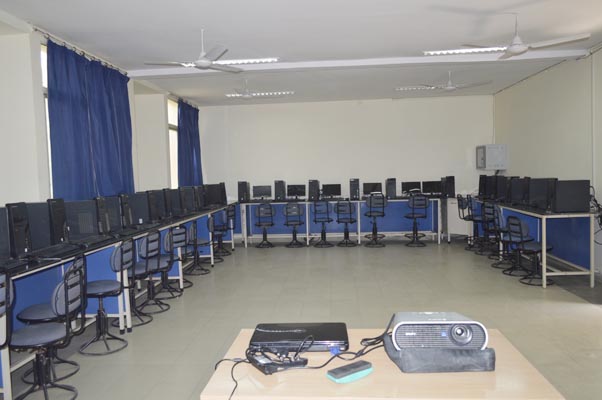
ICT Resource Centre
List of Available Equipment:
|
S.No.
|
Brand |
No. of Items |
|
1.
|
Computer System
Lenovo (A35) - 10
Lenovo (AQ8) - 9
Dell Optiplex 380 – 3
Dell Vostro -
2 |
24 |
|
2.
|
D-Link Switch (24
port) |
1 |
|
3.
|
Projector (Sony) |
1 |
|
4.
|
OHP |
1 |
|
5.
|
TV |
1 |
|
6.
|
Multifunction Printer |
1 |
|
7.
|
Radio |
1 |
|
8.
|
Digital Camera |
1 |
|
9.
|
Dell Laptop |
1 |
|
10.
|
CD ROMS |
50 |
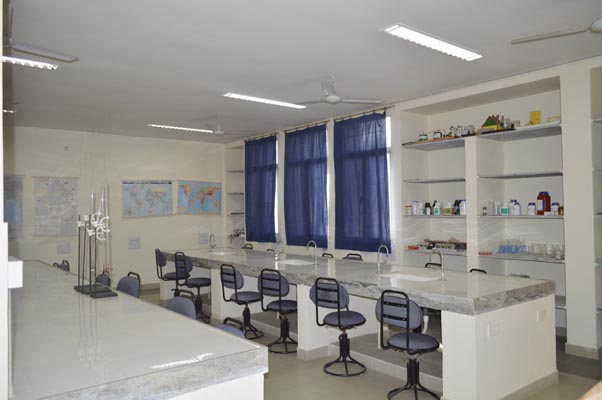
Curriculum Laboratory
List of Science Equipments &
Chemicals
I. List of Science Equipments
|
S.No. |
Name of Item |
Quantity |
|
1.
|
Burette Stand |
04 |
|
2.
|
Boiling Tubes |
06 |
|
3.
|
Concave Lens |
04 |
|
4.
|
Convex Lens |
04 |
|
5.
|
Concave Mirror |
04 |
|
6.
|
Convex Mirror |
04 |
|
7.
|
Connecting Wire (Copper) |
0.5 Kg |
|
8.
|
Bar Magnet |
02 |
|
9.
|
Magnetic Needle |
02 |
|
10.
|
Laboratory Thermometer |
02 |
|
11.
|
Lechlanche Cell |
01 |
|
12.
|
Filter Paper |
01 Pkt. |
|
13.
|
Thistle Funnel |
04 |
|
14.
|
Petri Dish |
06 |
|
15.
|
Glass Slides |
01 Pkt. |
|
16.
|
Cover Slips |
04 Pkt. |
|
17.
|
Slide Box |
01 |
|
18.
|
Reagent Rack |
01 |
|
19.
|
T.S of Permanent Slides |
11 |
|
20.
|
Pipette |
02 |
|
21.
|
Tripod Stand |
04 |
|
22.
|
Testtube holder |
04 |
|
23.
|
Wire Gauge |
06 |
|
24.
|
Test Tube Stand |
06 |
|
25.
|
Test Tube |
12 |
|
26.
|
Blue Litmus Paper |
01 Pkt. |
|
27.
|
Red Litmus Paper |
01 Pkt. |
|
28.
|
Beaker (100 ml) |
02 |
|
29.
|
Beaker (250 ml) |
02 |
|
30.
|
Beaker ( 500 ml) |
02 |
|
31.
|
Watch Glass |
03 |
|
32.
|
Galvanometer |
02 |
|
33.
|
Voltameter |
02 |
|
34.
|
Ammeter |
02 |
|
35.
|
One Way Key |
02 |
|
36.
|
Glass Prism |
02 |
|
37.
|
Glass Slab |
02 |
|
38.
|
Resistance Box |
02 |
|
39.
|
Microscope |
01 |
|
40.
|
Stop Watch |
01 |
|
41.
|
Spirit Lamp |
06 |
|
42.
|
Droppers |
04 |
|
43.
|
PH- Paper |
01 Pkt. |
|
44.
|
Rheostat |
02 |
|
45.
|
Electronic Balance |
01 |
|
46.
|
Measuring Cylinder (500
ml) |
01 |
|
47.
|
Reagent Bottles |
06 |
II. List of Chemicals:
|
S.No. |
Name of Chemical |
Quantity |
|
1.
|
Conc. Acids ( HCl, HNO3,H2SO4) |
500 ml |
|
2.
|
Copper Sulphate |
500 gm |
|
3.
|
Ammonium Chloride |
500 gm |
|
4.
|
Ferrous Sulphate |
500 gm |
|
5.
|
Glacial Acetic Acid |
500 ml |
|
6.
|
Iodine Resublimed |
100 gm |
|
7.
|
Iron Fillings |
500 gm |
|
8.
|
Sodium Bicarbonate |
500 gm |
|
9.
|
Sodium Carbonate |
500 gm |
|
10.
|
Sodium Hydroxide |
500 gm |
|
11.
|
Potassium Hydroxide |
500 ml |
|
12.
|
Zinc Granules |
500 gm |
|
13.
|
Calcium Chloride |
500 gm |
|
14.
|
Phenopthalein |
125 ml |
|
15.
|
Safranine Solution |
125 ml |
|
16.
|
Methylene Blue |
125 ml |
|
17.
|
Magnesium Ribbon |
01 Roll |
|
18.
|
Glycerine |
250 ml |
|
19.
|
Spirit |
500 ml |
|
20.
|
Copper Turnings |
500 gm |
|
21.
|
Starch Powder |
|
|
22.
|
Potassium Permanganate |
500 gm |
III. List of Charts:
|
S.No. |
Name of Chart |
Quantity |
|
1.
|
Human Respiratory System |
01 |
|
2.
|
Human Digestive System |
01 |
|
3.
|
Human Circulatory System |
01 |
|
4.
|
Human Excretory System |
01 |
|
5.
|
Human Nervous System |
01 |
|
6.
|
Human Skeleton System |
01 |
|
7.
|
Periodic Table |
01 |
List of Social Studies Lab. Materials:
|
S.No. |
Name |
Quantity |
|
1.
|
Atlas |
01 |
|
2.
|
Globe |
01 |
|
3.
|
Physical & Political
Maps of India, World & Rajasthan |
06 |
List of Psychological tests
|
S. No. |
Name of Tests |
|
1. |
Academic
Achievement Motivation Test (AAMI) |
|
2. |
Academic Anxiety
Scale for Childrn (AASC) |
|
3. |
Achievement
Motivation Test |
|
4. |
Adjustment
Inventory for School Student (AISS) |
|
5. |
Sharma Adolescent’
School Satisfaction Inventory (SASSI) |
|
6. |
Adolescent’s
Emotional Adjustment Inventory |
|
7. |
Bell’s Adjustment
Inventory (BAI) |
|
8. |
Bist Battery |
|
9. |
Children’s Self
Concept Scale |
|
10. |
Decision Making
Scale |
|
11. |
Educational
Adjustment Inventory (EAISS) |
|
12. |
Educational
Aspiration Scale (EAS) |
|
13. |
Environmental
Awareness Test of Teachers (EATT) |
|
14. |
Job Satisfaction
Scale for Primary and Secondary Teachers |
|
15. |
Kuslum Teacher
Effectiveness Scale |
|
16. |
Learning
Environment Inventory |
|
17. |
Multifactor
Emotional Intelligence Scale (MEIS) |
|
18. |
Pramila Group Test
of Intelligence (PGIT) |
|
19. |
Self Concept
Questionnaire (SCQ) |
|
20. |
Sharma
Adolescents’ School Satisfaction Inventory (SASSI) |
|
21. |
Sinha’s
Comprehensive Anxiety Test (SCAT) |
|
22. |
Stress Inventory
for School Students (SISS) |
|
23. |
Student’s
Examination Anxiety Test (SEAT) |
|
24. |
Study Involvement
Inventory (SIT) |
|
25. |
Teacher’s
Emotional Intelligence Inventory (TEQI) |
|
26. |
Upadhyay Saxena
Socio-Economic Scale (USSESS) |
|
27. |
Verbal test of
Creative Thinking |
|
28. |
Vocational
Maturity Scale |
|
29. |
Comprehensive
Modernization Inventory (CMI) |
|
30. |
Maansik Yogyata ki
Sanshodhit Saamohik Pariksha |
|
31. |
Attitude Scale
Towards Homework |
|
32. |
Sentence
Completion Test |
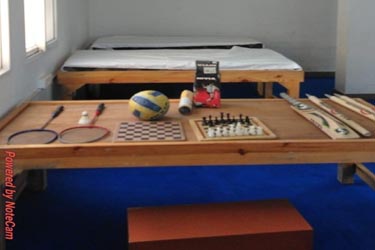
Health & Resource
Centre
The Health & Resource Centre is equipped with an exhaustive list of
equipment for both indoor & outdoor games such as Badminton, Football,
Cricket, Table Tennis, Carrom, Chess, Yoga Mats etc. for organizing
tournaments and creating awareness towards physical fitness and health.
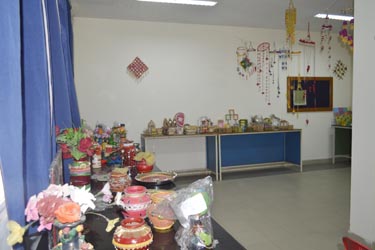
Art/Craft Resource Centre
To inculcate aesthetic sense and creativity, the art & craft resource
centre comprises of art & craft materials, paints, colors, models,
charts, musical instruments etc. The students are enabled to understand
and learn about different forms of art.
|